
Risk-Based Thinking Beyond the Risk Register: Why MedTechs Need a More Dynamic Approach to QMS Risk
By: Roy R. Bearry
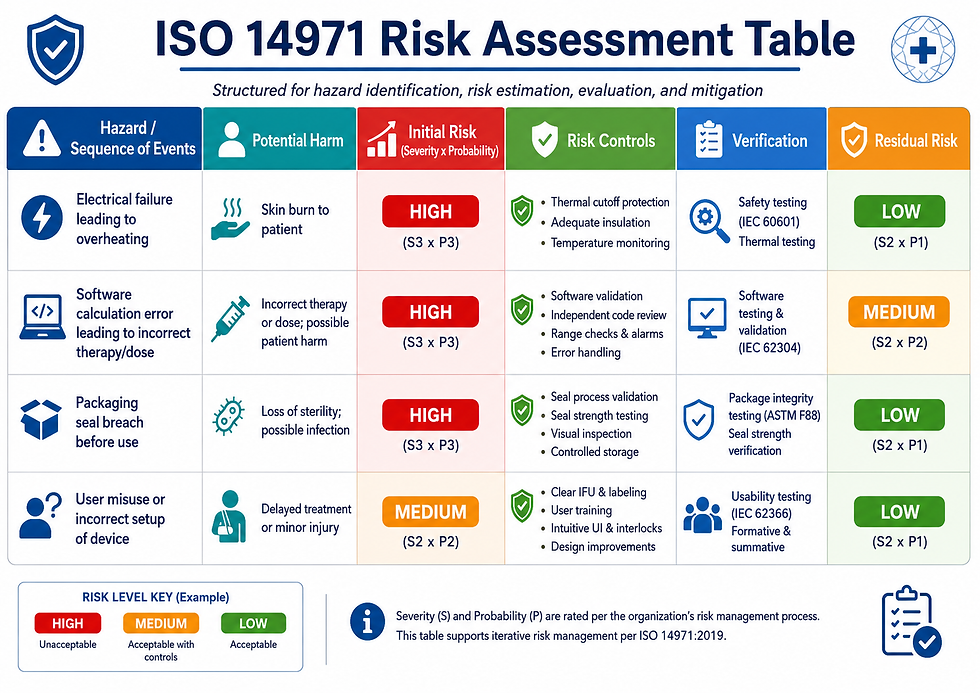
For many MedTech organizations, “risk‑based thinking” still translates into a static artifact: a risk register, a spreadsheet, or a template completed during audits or annual reviews. While these tools are useful, they represent only a fraction of what regulators expect and what modern medical device operations require.
Today’s regulatory environment - shaped by ISO 13485:2016, the EU MDR/IVDR, FDA’s QMSR, and global harmonization efforts - demands a more dynamic, integrated, and behavior‑driven approach to risk. Risk‑based thinking (RBT) is no longer a procedural checkbox. It is a system‑level mindset that must influence decisions, resource allocation, and process design across the entire product lifecycle.
MedTech companies that treat RBT as a living system - not a document - are the ones that consistently demonstrate control, resilience, and inspection readiness.
RBT Is Not a Document. It’s an Operating Model.
A risk register captures known hazards, mitigations, and residual risk. But it cannot capture the real‑time risk signals that emerge from day‑to‑day operations:
A trend in ambiguous complaint classifications
A recurring training gap in a critical process
A supplier’s subtle decline in on‑time delivery
A pattern of “minor” nonconformances that share a root cause
A design team consistently working under compressed timelines
These signals rarely appear in a risk register until after they have already created downstream issues. RBT requires organizations to treat these signals as early indicators, not noise.
In MedTech, where product safety, patient outcomes, and regulatory compliance are tightly intertwined, the cost of missing early risk signals is high. RBT must therefore be embedded into the daily rhythm of the organization - not just its documentation.
Why MedTechs Struggle With RBT
Despite strong regulatory frameworks, many MedTech companies still experience gaps in risk maturity. Common challenges include:
1. Over‑reliance on formal risk tools: FMEA, hazard analyses, and risk registers are essential—but they are retrospective. They capture what is already known, not what is emerging.
2. Siloed ownership of risk: Quality owns the register. Engineering owns design risk. Operations owns supplier risk. Clinical owns patient risk. But regulators expect integrated risk management, not parallel systems.
3. Risk fatigue: Teams often view risk activities as administrative burdens rather than decision‑support tools. This leads to superficial scoring, copy‑paste mitigations, and risk assessments that do not reflect operational reality.
4. Lack of leading indicators: Most MedTech metrics are lagging: complaints, CAPAs, audit findings, deviations. RBT requires predictive indicators that surface risk before it becomes a problem.
5. Cultural barriers: Employees may hesitate to escalate concerns, challenge assumptions, or question established processes—especially in high‑pressure development environments.
These challenges are not failures of the risk register. They are failures of risk‑based thinking.
What RBT Looks Like in a High‑Maturity MedTech QMS
Organizations that excel at RBT treat risk as a continuous, cross‑functional discipline. Several characteristics stand out:
1. Risk is embedded in decision‑making: Teams routinely ask:
· What could go wrong?
· What is the impact if we’re wrong?
· What controls do we need before we proceed?
This applies to design decisions, supplier changes, validation strategies, and even staffing.
2. Risk signals are monitored like vital signs: High‑maturity organizations track:
· Process capability trends
· Supplier performance drift
· Training effectiveness
· Human factors observations
· Complaint symptom patterns
· Software development velocity and defect density
These signals feed into risk reviews long before they trigger CAPA.
3. Risk ownership is distributed: Quality facilitates, but every function owns its risks. Engineering owns design risk. Operations owns manufacturing risk. Clinical owns patient‑use risk. Regulatory owns compliance risk. Leadership owns strategic risk.
This distribution aligns with ISO 13485’s emphasis on competence, awareness, and leadership responsibility.
4. Risk reviews are dynamic, not annual: Instead of waiting for management review, high‑performing MedTechs conduct:
· Quarterly cross‑functional risk reviews
· Real‑time risk escalations
· Rapid risk assessments during change control
· Post‑market surveillance‑driven updates
Risk becomes a living system that evolves with the product and the organization.
5. Risk informs resource allocation: RBT is not just about identifying hazards - it’s about prioritizing investment:
· Where do we need more testing?
· Which suppliers require deeper oversight?
· Which processes need automation?
· Where should we add training or headcount?
This is where RBT becomes a competitive advantage.
The Hidden Value of RBT in MedTech
When implemented well, RBT strengthens the entire QMS:
1. Faster, more confident decision‑making: Teams can move quickly because they understand the risk landscape and the controls in place.
2. Stronger inspection readiness: Auditors increasingly ask: “How do you use risk to run your business?” Not: “Where is your risk register?”
RBT provides a compelling narrative of control.
3. Reduced CAPA burden: Early detection prevents systemic issues from escalating into CAPAs.
4. Better patient outcomes: Risk‑informed decisions reduce the likelihood of design flaws, usability issues, and post‑market failures.
5. Organizational resilience: Companies with strong RBT adapt more effectively to:
· Regulatory changes
· Supply chain disruptions
· Market shifts
· Technology evolution
RBT is not just compliance - it is operational strength.
How MedTechs Can Elevate RBT Beyond the Register
Here are practical steps MedTech organizations can take:
1. Build a cross‑functional risk council: A small group that meets quarterly to review emerging risks, trends, and cross‑functional dependencies.
2. Integrate risk into change control: Every change—design, supplier, process—should include a risk impact assessment that is meaningful, not perfunctory.
3. Use leading indicators: Examples include:
· First‑pass yield
· Human factors observations
· Supplier quality drift
· Training effectiveness scores
· Software defect trends
These indicators should feed into risk reviews.
4. Strengthen risk communication: Risk dashboards, heat maps, and concise summaries help teams understand what matters most.
5. Train teams on cognitive bias: Risk assessments are only as good as the judgment behind them. Training teams to recognize bias improves risk quality.
6. Treat the risk register as a living document: Update it when:
· New information emerges
· Controls change
· Post‑market data shifts
· New suppliers or technologies are introduced
Conclusion: RBT Is the Future of MedTech Quality
As MedTech products become more complex - software‑driven devices, AI‑enabled diagnostics, combination products - the limitations of static risk tools become more apparent. Regulators are moving toward system-based inspections that evaluate how organizations think, not just what they document.
Risk‑based thinking is no longer optional. It is the backbone of a modern, resilient, inspection‑ready QMS.
MedTech companies that embrace RBT as an operating model - not a document - will be the ones that deliver safer products, scale more effectively, and maintain regulatory confidence in an increasingly demanding global environment.
MedTech teams know static risk tools aren’t enough. M.E. Dorat Consulting turns risk‑based thinking into a true operational advantage—strengthening your QMS, boosting compliance, and building a culture that moves faster and stays inspection‑ready.
If you’re ready to modernize your system and make risk your engine for growth, let’s get started. https://www.medoratconsult.com/


Comments